Killing Car Sales in Canada - the 2019 Federal Budget
On Tuesday last - despite the money-wasting fruitless shenanigans of the main opposition party - Canadian
Finance Minister Bill Morneau delivered the government's 2019-20 budget. A whopping 464-page doorstop
which intuitively says it's about anything but transparency. I have not read all of it, only the portions
which appear relevant to climate change and by extension, electric vehicles. (Fortunately, the search function
in PDF tools lets one home in on key phrases and words quickly, better than the table of contents.) What there
was didn't take long to read. Just 11 pages of the 464, and most of that tangents and fluff. Pages 83 to 93 in
https://www.budget.gc.ca/2019/docs/plan/budget-2019-en.pdf if you want to see for yourself.
So let me reproduce the interesting bits - it won't take long.
"To expand the network of zero-emission vehicle charging and refuelling stations, Budget 2019 proposes
to build on previous investments by providing Natural Resources Canada with $130 million over five years,
starting in 2019–20, to deploy new recharging and refuelling stations in workplaces, public parking spots,
commercial and multi-unit residential buildings, and remote locations."
That statement would be more reassuring if the government's current programs in this space were
functional in terms of delivering 'the network of zero-emission vehicle charging and refuelling stations'.
Natural gas is NOT a zero-emissions transportation fuel. Period. Hydrogen vehicles are a little trickier.
Hydrogen combustion vehicles are not zero-emissions. Hydrogen fuel cell vehicles emit water vapour, which most
climate science acknowledges to be a greenhouse gas (GHG). So, calling them 'zero-emissions' requires a bit of work
on definitions.
The Electric Vehicle Infrastructure Demonstration (EVID) program which closed to applications in
early February 2018, has not yet pushed a dollar out the door - more than a year later.
The Electric Vehicle and Alternative Fuel Infrastructure Deployment Initiative (EVAFID) program has
delivered more dollars to natural gas and hydrogen filling stations than to electric vehicle charging stations.
Don't take my word for it, look at the
[dead link: https://www.nrcan.gc.ca/energy/alternative-fuels/fuel-facts/ecoenergy/19464] government's list of
EVAFID awards yourself
. It's another fossil fuel subsidy program masquerading as a carbon reduction program.
A hydrogen filling station does not know if the vehicle at the pump is a hydrogen combustion vehicle or a
hydrogen fuel cell vehicle.
If I did the addition correctly, that's $6,502,000 (45%) for natural gas (a GHG 56 times more potent than
carbon dioxide), $3,000,000 (21%) for hydrogen (made mostly from natural gas in Canada today), and $4,967,000 (34%)
for charging stations for electric and plug-in hybrid vehicles. Yes, even the 'electric car' charging stations
provide a benefit to some vehicles that burn gasoline. (E.g. the Mitsubishi Outlander PHEV, despite its small
battery, has a fast-charge connector as standard equipment.) The program the federal government promotes as being
for zero-emissions electric vehicles puts 66% of its funds into infrastructure that actual 'zero-emissions' electric vehicles
cannot use.
If the ratio holds, that's another $87 million plus for the fossil fuel industry of the
proposed $130 million.
Experience in other jurisdictions proves that the non-Tesla automotive industry does not respond to voluntary
targets, nor are they interested in ramping up electric vehicle production unless forced to do so. More relevant
is the fact that Canada does not have a domestic car and light truck industry, so those decisions are made in
Korea, Japan, Germany, Italy and the U.S. At least it's only $1 million a year (for five years). Looking
out five years to hope supply can meet with demand is disappointing when we know that today's supply of
electric vehicles doesn't keep up with today's demand for them in Canada. For most models, prospective
customers can't find a vehicle in a showroom, or get a test drive, and are told that an order (with payment)
placed today will likely take months to be delivered. ("But", says the salesperson, "over here I have a lovely 4-door pickup truck...")
$300 million over 3 years is $100 million a year. At $5000 per vehicle (maximum), that's a cap of 20,000 vehicles
a year. That's simply not good enough, if we are serious about reducing GHG emissions. It is definitely not going to
induce an electric vehicle industry to spring up in Canada. It's half the existing incentive in Donald Trump's
U.S. But the killer line is: Program details to follow. It is unique in my experience with federal
budgets to see a program announced with a fixed sunset date, but an unknown start date.
My biggest problem with this vague incentive is that it is going to hurt Canadian car sales for the next few months -
not just electric car sales (which it will kill almost completely except in the luxury segment).
Canadians have not seen a rise in real incomes since Harper took power. Most are
earning less - in real, inflation-adjusted terms - than they did over a decade ago. (Per the 2016 census,
median
total household income rose by 10.8% from 2005 to 2015. Inflation rose by 20% during the same period
(you have to do some math with the data shown
here).
So, our average household is making about 10% less in real terms than a decade ago (incomes did not keep up with
inflation in 2016-2018 either). And they have an older car - which they likely still need and have not been able
to afford to replace for some time - so, an incentive
to buy a new car - electric or other - is going to be of interest, especially if we're shopping in the
sub-$45,000 price range, where $5,000 represents more than 10% of the sticker price.
While few EVs on sale in
Canada today come in under $45,000 as battery capacity has been rising dramatically, a few are close. It's reasonable for potential car-buyers to wonder if
electric carmakers might be prepared to shave $600 or $800 off their current MSRP (possibly related to the
continuing drop in battery prices or offering a version with a slightly smaller battery) to meet the $45,000
target. My point here is
that while the incentive announcement is going to hurt EV sales
in Canada pretty hard for months to come, it's also going to impact moderately-priced non-electric car
sales until cash-strapped Canadians know what the potential incentive could mean for them. (It likely won't
impact luxury cars or light trucks.)
Well, that 2018 strategy certainly didn't induce GM to keep the Oshawa car plant open as part of their
plan to shift to electric vehicles (that's going to happen in other countries, including the U.S.).
The only mass-production electric being built in Canada today is the
plug-in hybrid Chrysler Pacifica, which doesn't qualify for the purchase incentive because it's a hybrid
and because the price is well above $45,000. Maybe it will help Magna, who has done a lot of the grunt
work on the Smart Fortwo electric 2-seater, which creates some good jobs in France.
Well, at least the made-in-Canada Chrysler Pacifica qualifies here with its 16 kWh battery. The Chevrolet
Volt (16.5 kWh) also qualifies, though it is being discontinued (and not made in Canada). The Mitsubishi Outlander
PHEV, Toyota Prius Prime, all the Ford plug-in hybrids, the Hyundai Ioniq plug-in hybrid, the Hyundai Kona
plug-in hybrid, the Kia Niro plug-in hybrid ... are left out in the cold with battery capacities of less than
15 kWh. And we know when this incentive will begin (last Tuesday), and how much it is worth.
The budget also noted the 2009 G20 commitment to "to phase out ... inefficient fossil fuel subsidies" by 2025.
Not mentioned in the budget is last year's $4.5 billion purchase of an oil pipeline courtesy of Canadian taxpayers.
Or the continuing tilting of the playing field (e.g. by allowing the NEB to approve more pipelines without considering
climate change or the most significant of environmental damage expected if such pipelines are built). Or that
the government doesn't actually even know how many programs it has which provide subsidies to the fossil
fuel industry, or how much they are costing Canadian taxpayers (though others have some pretty good numbers,
like the International Monetary Fund).
But in a refreshing bit of transparency, the government does note it has not yet actually phased out a single
incentive to the fossil fuel industry which was in place in 2015 when they took office. I mention this only because
I'm sure the industry-funded astro-turfers will soon be whinging about these electric and hydrogen vehicle
focused taxpayer-funded measures (capped at $128 million total per year, if fully spent - less than 3% of the Kinder Morgan payment
last year) as some horrid affront to the 'free-market economy' while completely ignoring the annual $46 billion
a year in subsidies to the oil and gas industry in Canada (2016 estimate).
[Let's suppose for argument's sake that the annual subsidies for oil and gas in Canada were $50 billion
in 2018 (the IMF's $46 billion estimate for 2016 plus the $4.5 billion for the Kinder Morgan Trans Mountain existing pipeline -
rounded down.) Now, let's go have a look at
some motor fuel sales numbers from Statistics Canada for 2018. Doing the addition, and knowing there are 1000 litres
in a cubic metre, we get 46,301,000,000 litres of motor gasoline sold in 2018. (I'm assuming that propane and
natural gas figures are small enough to ignore. They're not available in the StatsCan data. Diesel is more
complicated as a lot is used for heating fuel, on farms, boats and other non-transportation applications.
While I suspect the majority is used in heavy trucks and equipment, most of that will be written off as business
expenses, so I'm going to ignore it for this rough calculation.) Now, let's divide the $50 billion in subsidies
I proposed initially by the number of litres of gasoline sold in Canada in 2018: 46.3 billion. Subsidy per litre
(drum roll please): $1.08. Kind of makes that 'carbon tax' of $0.04 per litre seem less dramatic. (If you want
to dispute the numbers, please take it up with the International Monetary Fund, Bill Morneau or Statistics Canada as
appropriate. All I contributed was the arithmetic.)]
March 4th, 2015
Consumer Debt Farce
Most years, about this time, I reflect on the hypocrisy of another Harper CPC destruction of things
of value, and increased spending on wasteful initiatives. Used to be called a budget, but in latter years,
it has become the annual Omnibus Bill. This year, the Cons have messed up the books and screwed over the
Canadian economy so badly, they can't figure out how to present numbers that won't result in them
becoming a laughingstock on the national and international stages, or lynched by their 'base' - fiscal
conservatives who will be wondering how after six years of scrimping under the false austerity ideology,
how the oilconomy collapsed like a house of cards. (Hint: oil in 2015 is the buggy-whip of 1901.)
But as there is no government budget this year (as our democracy requires in terms of
accountable government), another piece of disinformation is bothering me: the federal government and mainstream media's
fixation on consumer debt in this country. Short response - learn some basic economics and get over
yourselves. Stop blaming consumers for acting rationally, and try some rationality yourselves.
Today, Equifax announced that
non-mortgage consumer debt averaged about $21,000 per Canadian. Oh,
the horror! The sky is falling! The end is nigh!
Twaddle and nonsense.
Let's look at some reality on this subject, and add some perspective. $21,000 is a good size car loan.
What's up in the Equifax report? Car loans. Good news for automakers (yes, we still make cars and trucks
in Canada, not just feed stock for their fuel). After getting bludgeoned by the 2008-9 recession
(and continuing 'fragile' recovery - as if that were true for most Canadians) which our
economist PM SAID COULD NOT HAPPEN HERE, a few of us have put off buying a new vehicle for about 5-7 years,
and now really can't put it off any longer. Apparently some people are also borrowing to invest, which
while it is debt, likely enhances someone's net worth. If you are really concerned about debt per
Canadian, consider that PM Harper has subscribed about $55,000 of non-mortgage debt for every Canadian in the
federal debt as of 2013 - so, more than that now - or about 2.5 times as much as we have taken on as individuals.
Debt delinquency rates are down in 2014 - which means Canadians are managing their debt. Canadians are
using less credit card debt, and shifting to lower rate credit tools. In other words, they are
managing their debt. (Canadian consumers are increasing their mortgage debt, probably because real estate is the
ONLY investment in Canada today open to 'regular' Canadians which is reaping real (after inflation)
returns in a moderately safe
vehicle, and is not likely to be sold off or out-sourced to China by the current federal government.)
Then there was much theatrical wailing and gnashing of teeth about how Canadians are now using debt
as part of their regular consumption patterns, instead of saving, like we used to do in the 'good old days'.
Well, if I save and pay cash up front for my purchases, I don't get 1% or 2% or 4% back in credits like
I do with my credit cards. Why should I pay a 4% penalty for using savings and cash? In the 'good old
days', when the Canadian banks were competent investment managers, my savings account would pay a real return - marginally
higher than the rate of inflation. If I put money in my savings account at a bank today, I lose at
least 2% a year on the value just to inflation, and likely much more once service charges are added in. Why would I
save my money, only to watch it shrink in my savings accounts like CSBs, GICs or other 'safe' savings
vehicles? That's not rational. Dear PM Harper, BoC Governor Poloz and Canadian financial institutions:
if you want Canadians to start saving, provide an incentive to make it a good financial strategy for
consumers, instead of a path to losing money. If you really want to kick-start the economy, increase
real wages for the bottom 50% of wage earners. They'll spend that money, creating business and jobs.
The OPEC countries know the oil age is coming to an end. That's why they're not curbing production to
keep the price of oil high so other countries have a profitable oil sector. Time for the Canadian government and
major Canadian oil companies to read the memo. There's a good reason the rest of world is pulling
back on their previously planned investments in the bitumen patch. If you think really hard about it,
you can figure it out, too.
Plenty of other misdirection in play just now, too. More 'tough on crime' pandering legislation
which will actually affect about a dozen (or fewer) actual convicted criminals. Suppressing religious
freedom - well at least for Muslims. Raising the spectre of 'terrorism' (yet to be defined for Bill
C-51), as a justification for the police surveillance state, when they couldn't push those measures
through on the shameful and cynical abuse of the memory of Rehteah Parsons. Our elected officals
would do well to remember their job is to represent Canadians, not blame us, suppress us and impoverish us.
As they said into the lead-up to the the first Clinton election: "It's the economy, stupid."
Now, federal MPs, get back to work, the work you are supposed to be doing - for us, not against us.
Oh, and Canadian voters, when you get to the ballot box, remember we need a government which is
interested in creating a diversified economy and real, full-time jobs, not just fantasize about them
all being in Alberta.
June 5, 2014
Ontario Election Day
There's a week left until Ontario's provincial election day. In general, what has struck me is the
almost complete lack of content in the platforms other than the ground the Liberals staked out in their
budget. Apparently the PCs can't do math, and the NDP can't figure out a budget. As for the gas plant
'scandal', well, looks to me like lots of mistakes were made - including by private sector contractors -
and the real damage done is more in the order of $253,000,000 than a billion dollars. It took some
digging to find that number. Frankly, in this campaign, be afraid of big round numbers (like 1,000,000
jobs to be created or 100,000 jobs to be eliminated - they look like made-up-for-PR-impact numbers).
However, other than the general noise level that seems to come with elections, one thing has struck
me in this campaign - the apparent inability of any of the parties, or many citizens, to understand
the reality around electricity prices. Hit-and-run sound-bytes abound, and when I try to find the
substance behind them, all I can grab onto is smoke. A few examples.
PC Leader Hudak claimed that high electricity rates in Ontario are driving jobs to Michigan. So, I
looked up retail electricity prices in Michigan - they are around US$0.18 per kWh (before taxes,
connection fees, delivery fees, etc.) Allowing for the wounded Canadian dollar exchange rate, that's
Cdn$0.20 per kWh. Well, the most expensive retail kWh in Ontario today is Cdn$0.135 - about 35% less
than the price in Michigan. Of course, Michigan might be subsidizing corporate pricing to entice
business, but apparently the PC platform is against such corporate welfare as well.
Time of use pricing in Ontario does not reflect demand periods. Year-round, 7 p.m. daily is the
start of the lowest price period. However, most weekdays, 7 p.m. is in the band of the highest
use. If we want to help lower electricity prices, let's get the pricing signal right. Start
off-peak pricing when the demand is lower. While we're at it, let's create a new 'super-off-peak'
rate from 1 to 5 a.m. daily, which is when, on some days, Ontario has to pay other jurisdictions
to take electricity off our grid because we already have too much nuclear generating capacity
for baseload demand. If we can get some Ontarians to move their electricity demand to this
daily trough, we can save money for all Ontario taxpayers. I'd set my dishwasher to start at
2 a.m. instead of 7 p.m. to save a buck or so every day. The delay timer is built right into
the machine, and I can figure out how to push it to save money. How about you?
The NDP want to take the HST off our electricity bills. Wow! How much will it cost Ontarians
to renegotiate the federal/provincial HST deal (remember, we sacked all the old provincial
sales tax folks to reduce public service headcount, and get a simpler no-exceptions system,
which is why we now pay HST on books and services, where we did not pay PST before). Then,
each electrical utility will have to change their billing system to not charge the HST,
hire temporary staff to deal with all the issues that will arise during the phase-in period,
and presumably Ontario taxpayers will have to absorb the lost provincial tax revenue and
cough up money to the feds for the GST (5%) portion they will feel they are still entitled
to receive. Beyond all that nonsense, this sends the wrong signal to ratepayers. If we want
people to use less electricity, don't reduce the price because that reduces the incentive to
make a change.
On a CBC radio phone in show, a woman said her annual electrical bill for a modest bungalow in
southern Ontario is over $15,000 per year. This one leaves me flabbergasted! Seriously?!!
Fifteen grand a year? I just paid my electricity bill for our 3-bedroom house with 5
full-time occupants. $118 for a
month. That's typical of late. That's the entire bill, electricity, debt retirement charge,
delivery, regulatory charges, HST, the whole smash. Multiply by 12 months, and I get $1,416 - or less
than one-tenth of what the caller reported. But here's where it gets crazy; my electricity
bill includes charging an electric car, an electric tractor, a cordless electric mower
and runs multiple computers for my business. (We don't heat with electrity, house or water.
For that we use a combination of solar and natural gas. Our natural gas charges for the
past year were just over $600. Yes, that's for the year, not per month.)
If you are one of those people who are paying over $15,000 a year for electricity for
a regular house in Ontario, please get in touch with me. For my regular consulting rate
plus expenses, I will figure out how to save you a lot of money.
May 5, 2011
The Harper Majority
Stephen Harper's party (the nominal Conservative Party) has won a majority of the seats in the
House of Commons. Before his supporters take comfort in this, they need to consider that the real
winner of the popular vote on Monday was 'Did Not Vote', which comprised 38.6% of eligible voters.
By comparison, the Conservative Party of Canada obtained just 24.3% of the votes available in the
country (39.6% of the 61.4% of eligible voters that actually voted) - less than 1/4 of voters.
So, when Harper talks about his mandate to start implementing omnibus legislative packages
with a steam roller, remember that his real mandate came from less than 25% of Canada's eligible
voters.
When Harper talks about implementing the platform he was elected on, remember
what it really was.
Eliminate the federal deficit by 2014-15, that is, before the next election. Create more and better
jobs, and "complete our recovery from the global recession". Lower taxes. Make Canada safe, support
families, and stand on guard for Canada. Even their bit on accountability is short and weak,
in keeping with their record where party apparatchiks interfered with access to information responses
for political purposes.
I expect the NDP Official Opposition is going to take some months to become functional in the
Commons, let alone effective. They have a lot of babysitting to do, and I think some of their
new Quebec caucus members are going to look a bit weak when they face some real scrutiny about
their qualifications for office. Internal matters will keep the NDP from focusing on the national
agenda or effectively holding the Conservatives to account for some months.
May 4, 2011
Bin Laden Photos
I don't generally comment publicly about U.S. government matters. This is an exception,
as I am tired of the contrived media circus that is being thrown up around this issue.
I don't want to see them. Nobody else needs to see them. The real proof is that Ossama Bin Laden
is not going to appear live and in person in any future videos. For those that argue they need
additional proof (videos, photos) that Bin Laden is really gone, we know that if that material is
produced, they'll simply say the material was altered or manufactured. Donald Trump and 'the birthers'
have proven there is no level of evidence that can be produced that will shake them from their
belief. The same will apply here. The media doesn't need this sensational material, except
to fatten their bottom line.
We don't release post-execution photos of those put to death in U.S. prisons as a matter of
course. The same should apply here. Terrorists, on all sides, don't need any more martyrs.
So far, President Obama appears to be taking the high road on this matter. It's a nice change
from the behaviour of many U.S. federal officials, elected and appointed. The U.S. has some other issues to
address. Bin Laden's death was about closure for those affected by the deaths in which he had a hand.
Let's accept that closure, with reflection for all those that have suffered losses, and resolve
to move forward making a better world for all.
As for the results of the recent Canadian federal election, it's going to take me a few days
to sort out my reaction to this mess.
April 29, 2011
Harper Record Highlights
Or is that low-lights? The Harper campaign has been stressing several points this campaign -
just about anything to avoid talking about their actual record in office. Let's look at those points.
"The reckless Coalition". Possibly the most meaningless non-issue in Canadian electoral history.
There is nothing illegal, or unconstitutional about a coalition government. It worked in Canada during
World War 1 - under a CONSERVATIVE Prime Minister - Sir Robert Borden. His coalition with a large number
of Liberal MPs was called the Union government. Wouldn't it be nice if the current Prime Minister knew
this much Canadian Parliamentary history?
Strong Economic Management. These guys are contenders for the worst government for economic management in
Canadian history. They inherited a $13 billion dollar annual surplus from the Liberals, and in 4 years
managed to turn it into a $50 billion dollar deficit! The largest single-year deficit in Canadian history!
And that just a year after Harper boldly proclaimed in the 2008 election that Canada would not have a recession
in 2009, nor would his government ever run a deficit. Incompetence or lies? Either way, do you want these
guys running your economy in the future?
Law and order. Well, they've had five years, and don't seem to have made much ground on this front.
They sabotaged their own private member's bill to kill the long gun registry in September 2010. They're
adamant we need more prisons for 'unreported crimes'. Well, if a crime is unreported, there won't be
charges, and there won't be a conviction, so no need for more jail space. Crime rates in Canada are
actually falling, so we should not need as much space for offenders - unless the Conservatives know about
a lot more cases of fraud by their officials and staff that are still 'unreported crimes'. Let's face it,
if you want to be credible on law and order, stop breaking the law yourself (like calling an election
in violation of your own law for fixed election dates).
Contempt. This is the one the Harper campaign isn't talking about. It appears no one in the CPC
actually understands the reason they were defeated in the House of Commons. They withheld information
from our elected representatives. They lied to Parliament. And it appears they misappropriated funds
from border security to gussy up Tony Clement's riding for the G8 conference, but for things G8 delegates
would never see. This party misused RCMP officers, who were supposed to be protecting the Prime Minister
as unpaid bouncers at CPC election campaign events. This party carried out surveillance on people that
registered to attend rallies, and based on their findings, barred them from attending 'public' events.
This is just a tiny part of the on-going practice of this government that demonstrates their complete
lack of respect for democracy and the citizens of Canada. This government is full value for being
defeated for being found in contempt of Parliament - a historic event in Commonwealth Parliamentary
history. We cannot condone a government lying to Parliament and Canadians, let alone reward it for
such behaviour.
On May 2nd, vote for better. We deserve it.
April 28, 2011
If You Lie and Steal from Your Employer, You Don't Get Promoted
OK, it's a poor take on Jack Layton's torpedo on Michael Ignatieff in the national TV debate.
(You remember, the one where "The Consortium" - kind of like a Coalition, but one the Conservative
Party likes - would not let Green Party Leader Elizabeth May participate, but did allow a regional
party leader - the Bloc - take part.) However, the point is valid. The Conservative government
was defeated on a motion of non-confidence - because they were found in contempt of Parliament
because they withheld information from Parliament, and because this government lied to Parliament.
It is increasingly clear that this government diverted up to $50,000,000 from border defence
to building gazebos and other structures in Tony Clement's riding, which would never be seen,
let alone used, by G8 conference attendees, let alone on anything related to border security -
more than 300 km away.
This government has lied to its employer - us, as represented by the people we elected to the House of Commons.
This government has withheld information from us, that our representatives were entitled to have.
This government has misappropriated tax money for its own political purposes.
What frightens me most is that rather than getting ready to run these liars (that have debased the very
democratic principles they are sworn to uphold) out of town on a rail, based on recent polls, Canadian
voters appear poised to return them to office. If we won't hold them to account now, when? If the
Conservatives won't acknowledge through an entire federal election campaign why they were defeated, and
made this election necessary, what kind of delusional government can we expect if they are returned
with a majority?
A thought about polls. Polls are generally conducted by telephone, to listed land-line numbers.
That means, people that don't have land-lines, notably young people that use cellular phones and
smart phones as their primary telephone lines, typically don't get polled. As a result, it is likely
that the current major polling numbers actually overstate the support for the Conservatives and
Liberals - parties that typically pull strongly from the older, more established population.
Conversely, those polls likely understate the level of support for the parties that typically
pull more of their support from the younger end of the age spectrum, namely the NDP and the Greens.
That means that the apparent support for the NDP and Greens in the polls actually reflects a
greater change coming than the polls are reporting. Perhaps more Canadians than we think agree
that the Conservatives should not be rewarded for lying to Parliament, and the Liberals time in
the penalty box is not up for the Adscam scandal. Those Canadians are looking for another option -
and fortunately, we have them.
So, if ever there was an election where your vote might really count to shake things up in the
federal Parliament, this is it. If you want change, you really have to make the effort to vote
in this election.
This time, it's really your call. Vote for better.
April 27, 2011
On May 2nd, you can vote for Harper, or you can vote for better. Five years is enough.
This election, please vote for better.
Warning: I am in a dark mood as I write this. I have had an unblindered
view of reality the past few days, and it leaves me in despair for our ability to think.
Today is the first day of the second decade of the third millennium (AD or CE).
If you are hung up about the semantics of "Common Era", or the use of a dead language
(Anno Domini is Latin) for setting dates, you would be well served to surf elsewhere.
If you can't do the math to figure out 2010 was the last year of a decade, rather than
the first, or agree that January 1, 2001 (not 2000) was the first day of the 3rd millennium,
either figure it out or move to another Website. It's not going to get easier as
you proceed through this blog this year.
In honour of this 1-2-3 date coincidence, I will be providing 3 pieces of priceless
advice. Before that, a little reality as background.
We have entered the era of the oil apocalypse. From here on in, we will watch
our infrastructure begin to fail and rot. Instead of switching to a sustainable
paradigm, we will try to prop up the unsustainable until it collapses, taking us
with it. It is not too late to chart a different course, but we don't have the
foresight or courage to do so. The price we will pay for this is beyond comprehension,
but completely predictable.
Oil is now public enemy number 1.
You are an accomplice.
Our collective, insatiable addiction to oil is the fundamental cause of many of
the world's evils. The 'resource curse' has led to the overthrow of democratic
governments, massive loss of life, despoiling of our environment, and climate change.
It is the primary cause of resource wars, past, present and future. It is the
cause of most government corruption in North America today.
Oil is also the underlying cause of our on-going recession / stunted recovery
since 2008 in the industrialized world. Our global economy is predicated on cheap
oil. That era is over. China is virtually the planet's manufacturing centre now.
However, that only makes sense if it is cheaper to ship cheap goods halfway around
the world than to produce them locally. Even if shipping were to remain cheap,
China will implode as an economic power before 2020. It will likely take the U.S.
with it, assuming the U.S. economy lasts that long.
Each time our governments use more of our money to fund 'stimulus' projects that
are based on burning more oil, the deeper we are digging ourselves into the tar pit.
If our government's are truly committed to our interests (as opposed to gorging
themselves on oil lobby money), then they have to put all future tax-funded
stimulus funds toward localized initiatives that reduce the demand for oil. Period.
During the course of this decade, you will switch your energy usage away from oil.
It won't be a matter of choice, or doing something good for the environment, or
a legacy for your kids, or keeping your kids out of middle-east resource wars, or
making a political statement or any other do-gooder motivation. It will be the
result of simple financial or physical necessity. In other words, you won't be
able to afford it, or potentially able to get it at any price.
By 2020, Canada will no longer be a democracy - it will be a petrocacy.
Despite the wealth generated from the tar sands, selling oil to those that can
afford it, most Canadians will be living in poverty, as they were not prepared
to stand up for their rights when they were being steadily removed in the previous
two decades.
There are things we can do to avoid this collapse, but we won't, as they involve
planning, investing, inconvenience and delayed gratification. So instead, pick a good seat in a safe place,
and enjoy the show. (Spoiler alert: it's a snuff film.)
I promised to offer you 3 pieces of priceless advice. Here they are.
1) If you heat your home or other structure you value with oil, switch to something
else. Investigate the concepts of passive houses and zero energy houses. Upgrade
your insulation and weather-sealing. Seriously look into active solar heating -
the fuel is free. Beyond that, look into geothermal (ground-source heat pump)
systems, or automated wood-fuelled (e.g., pellet stoves) systems. (Natural gas
may be a bargain for a few more years, but it won't last forever.) If you can't
make these work with your current abode, move somewhere else where you can.
2) If you use petro-based (gasoline, oil, propane, natural gas) transportation
today, find an alternative. Walk, bicycle, public transit, homebrew biodiesel,
electric car or whatever else you can think of and will meet most of your needs.
If you think your job will survive the oil collapse, perhaps you should move to
within walking distance of it, or find work you can do primarily via telecommuting.
3) Learn how to fix things, and otherwise generally be frugal. The end of cheap
oil means the end of cheap, disposable, plastic goods. If you can fix things,
you will be valued in your community for that ability.
June 23, 2010
Ontario's No EV Policy Now 3 Months Old 2010.05.07
Early in February 2010, the Ontario Ministry of Transportation
stopped accepting registrations for electric vehicles in the province.
There was no announcement, and no consultation with EV advocates
or owners. The first few EV owners turned away at licence bureaus
did not even get a reason for the refusal.
When pressed for information, MTO officials offered up some
weak reasons. First, apparently large numbers of Ontarians were
fraudulently claiming their vehicles were powered by electricity,
so as to avoid Drive Clean tests. However, MTO's own data show less
than 100 cars and light trucks are registered as electric in Ontario.
(I can personally identify about 40 of those that are legitmately
electric powered.) MTO has the authority to inspect anything
they deem suspicious, and there are stiff penalties for false
statements on registration forms, including fines and jail time.
Prior to the secret licensing ban, electric vehicles in Ontario
were subject to exactly the same safety inspection, licensing and
insurance rules as any other vehicle on the road. The question MTO
still has not adequately answered is why this small population of
clean-air, environmentally-friendly vehicles has been singled out
for this degree of persecution, when street-racers actually have
to commit an offence to suffer any penalty, and gross polluters
can continue to operate on 'conditional' passes. For a government
that claims to support green vehicles, this government has a very
strange way of showing it.
Reasoned discussions with MTO officials since the secret ban
was discovered have dragged out over many weeks, with little sign
of progress toward getting the vehicles re-legalized in Ontario.
The only incentive the Ontario government offers for buying or
making an electric vehicle, small as it is,
ends on June 30, 2010 with the introduction of the HST.
For
more information on the Ontario electric vehicle licensing ban,
visit the 10n10.ca Web site.
March 19, 2010
Tories Filibuster Their Own Committee
Well, if we were hoping the Tories would come back from their ill-advised
prorogation and extended vacation in a better mood than they exhibited at the
end of 2009, we've certainly been given notice that's not going to be the case.
First, we have seen 2 Cabinet ministers go postal on airport security staff.
Not good form for a government that rides on the law and order agenda, especially
after gutting their own legislation with the prorogation in 2009. But it's worse
given the growing perception that this government has lost touch with voters,
is chafing under the constraint of a minority government that won't let it
ride roughshod over Canadians with a right-wing agenda they have to keep under wraps
lest Canadians figure it out and toss them unceremoniously from office. Making
matters worse, the slap on the wrist meted out to Rahim Jaffer smacks of two-tier
justice.
The Throne speech and budget documents presented don't indicate any change
of direction or "re-calibration" that could possibly warrant the prorogation.
That just makes it that much more evident the prorogation was a stall tactic,
likely trying to defuse the Afghan detainees committee hearings. That history
taints the idea of having a judge vet materials to which the House of Commons
has full rights to see uncensored. Our MPs are our final line of defense in
trying to get to the truth in government matters in our system of democracy.
Putting them off puts the definitive lie to this government's hollow claim to
being open, accountable and transparent.
However, the crowning touch in this 2 weeks of hypocrisy has to be that
[dead link: http://www.thestar.com/news/canada/article/782156--tories-muzzling-widow-of-rights-agency-head-she-says ]
in order to prevent
the appearance of witnesses that could shed light on how the government has been
dealing with an agency where it names the directors. This is not the behaviour
of a government with nothing to hide.
Bring on the contempt of Parliament motion! If this government really wants
to make Parliamentary history, let's get to it!
March 1, 2010
Well Done, Canada!
As a Canadian, and solely a mainstream observer of the events of the past
two weeks of the Vancouver Olympics, I admit to a degree of second-hand
pride in what I have seen. I'm sure there were issues I missed, and a
couple of blemishes we all saw, but all in all it appeared a colossal success!
Yesterday provided the crowning touches: 14 gold medal performances - the
most by any country ever in a Winter Olympics; the men's hockey final
with a script that could have been written for film; and, a closing
ceremony that poked a bit of fun at the glitch in the opening ceremonies
and allowed Catriona LeMay Doan a do-over on her opportunity to light
the flame. However, this builds upon years of work by many people with
inspiration, dedication, and perseverance. It was truly a showcase for this
country, to the world, and more importantly, to ourselves. From using the
event as an opportunity to teach people work skills, to the design and
construction of the torches for the cross-country torch run, to battling
the climate itself at Cypress Mountain, to the inclusion of the First Nations,
to the design of the beautiful and unique medals, to showcasing an electric
snowmobile at Whistler. We should also take a moment to think of all of
those that were successful because we did not notice their efforts:
facilities construction and maintenance, logistics required to house
the athletes, spectators, media and others; the security staff who
maintained order and ensured this event did not become a spectacle of
the unwelcome sort; the games organizers and volunteers that kept things
running in spite of the challenges seen and unseen by outsiders.
Of course, this generation of Canadians will never
forget the performance of the Canadian athletes, who clearly were the
focus of the event, which is as it should be.
Let us all look back on these games as symbolic of what we can
accomplish, on the podium, building the podium and behind it. Let us
move forward with this flush of success on so many fronts, and with quiet
pride build on it to create an even greater legacy that celebrates co-operation,
inspiration, and perseverance - truly Canadian qualities.
February 22, 2010
Boycott the Ottawa Water Rate Increase
Today, the Ottawa municipal government announced its intention
to increase residential water rates by 10% in 2010. This follows
three previous annual increases of 9% a year - about 40% in 4 years!
This time its supposed to pay for rainwater storage to prevent
overflows into the Ottawa River during rain storms. A mere
$140,000,000.00 is the initial estimate, to store 12,500 cubic
metres of storm water. Given it's an Ottawa
project (where 0 means 4%), we can be sure the final tab will be
considerably higher.
Hmmm, I figure 12,500 cubic metres would fill about 62,500 rain
barrels. Figuring the city could get those for $40 a piece or less
in that kind of bulk buy, that would cost about $2,500,000, and
would result in a lot of rainwater never seeing the municipal
wastewater treatment system. That's probably about one rain barrel
per four homes in the Ottawa area. $2.5 million or $140 million?
As an Ottawa taxpayer, there was never any doubt in my mind which way our
municipal government would choose to go on this one.
Want to protect your household budget against this tax grab?
Unfortunately, buying a rainbarrel won't necessarily do it unless
you use it to replace a lot of municipal water for your lawn or garden.
However, an inexpensive device that saves you water when your toilet
fills just might, as toilets typically consume a third or more of our
total residential water use. Save water and your money, or keep feeding
the Ottawa tax monster - your call.
February 7, 2010
What are Canadian Investors Smoking?
Here are a few interesting little factoids.
In October 2008, the TSX composite was trading between 9,000 and 10,000
points. In January 2010, when we have 280,000 fewer Canadians employed,
and even more less-employed (now working part time as opposed to full time
previously), the TSX composite is trading above 11,000 points.
Note that this drop in employment is in spite of billions of dollars
of government stimulus over the past year in Canada and the U.S., intended
specifically to create jobs! (e.g., HRTC) This means that our government debt is
growing, and we're going to have to make it up in the future via increased
taxes. (First instalment coming in July for residents of Ontario and
British Columbia as they fall subject to the HST.) Maybe it won't ding
you much, but paying an extra 8% on all services and many of the products
we buy is going to make a decided dent in our disposable income.
If we're likely to reduce our real consumption by 5 to 10% annually starting
in the third quarter, what's that going to do to Canadian retailers and
providers of services if most other Canadians do the same, because they're
still waiting for the alleged economic recovery?
Credible commodities analysts are forecasting reduced demand later this
year as major consumers built up inventory during 2009 when things looked
relatively cheap. If commodities (oil, coal, base metals, etc) take another
price hit or reduced demand or both, and we have fewer Canadians employed now
than 15 months ago, where's the cause for optimism in the investment arena?
February 5, 2010
Jobs Report - Not Happy Days Yet!
The key words in the reports today were not 43,000 new jobs.
The key words were "surprising", and "15,000 expected". I'm out
here on main street, and I got one of those 43,000 jobs (at
least as Stats Can would report it). And it's one of those
part-time jobs, which made up 97% of the reported
increase. Yup, just 3% of the net new jobs in January were
full-time. This is in the wake of our federal
government's full-court press on the stimulus side committing
billions of dollars into job creation, and it managed to create
just 1,400 new full-time jobs in January. Remember, we're still
down almost 300,000 jobs from where we were in October 2008.
And this presumably
doesn't include the damage done by Toyota shutting down multiple
assembly lines last week, and what that's doing to their local
suppliers.
[dead link: http://www.cbc.ca/m/touch/world/story/1.865763]
CBC.ca article "Jobless rate edges down to 8.3%"
Then there's the hyping of the non-news on the Buy America
front. In spite of the headlines, this "victory" is really
just window dressing. Essentially, Canadian companies now get
access to the American stimulus program, but only after the
money under that initiative has already been spent (only 12 days
remain under that initiative), and only in 37 of the 50 states.
And only after many Canadian companies shifted operations and
jobs to the U.S. in order to be able to participate, and there is
no sense of whether any of those jobs are ever coming back to Canada.
Further, the deal does not apply to any future U.S. government
spending, so this "win" has a two-week shelf-life. No jobs are
moving back north of the border for a two-week window of opportunity,
especially given the flip-side of this deal.
You see, U.S. companies now get unfettered access to Canadian
provincial and municipal spending which is still in the works,
and there are no apparent exclusions (like being limited to
stimulus fund spending), or a sunset clause on this access. It
appears Canada has been panicked into giving up more of its
economic sovereignty while accommodating a change the U.S. needed
to make anyway to deal with the reality that our two corporate
sectors are inextricably intertwined already. Coincidentally,
U.S. officials announced that they expect to double U.S.
exports by 2015, which will be difficult if other countries elect
to match the Buy America restrictions going forward.
Globe and Mail article "Ottawa hails Buy American deal"
CTV.ca article "Obama dilutes 'Buy American' rules for Canada"
February 4, 2010
Putting the Rogue in Prorogation - CPC 2010
Prorogation is a time-honoured Parliamentary procedure. CPC apologists,
please note that we are not arguing that point. Our issue is with the now
annual inappropriate use of the procedure by this government.
"The most common use of prorogation in current times is to allow the government
to re-cast its plans and agenda once it feels it has accomplished enough of its goals
from the current session. It will then prorogue Parliament and set a new agenda
through a new Speech from the Throne."
http://www.lawnow.org/Downloads/documentloader.ashx?id=6149
It is NOT intended as a way for a floundering minority government to
avoid a non-confidence vote (CPC December 2008 - ending a session that was
just 13 days old), or to shut down the work
of Parliamentary committees that are proving the government has ignored
its legal and moral commitments as the legal representative of our country
regarding international law and negotiations (CPC December 2009).
It's pretty clear that this government had not accomplished the bulk of
its goals after 13 days of business in 2008, nor has it accomplished the
bulk of the work it set out in its last Throne speech given the number of Bills
that died on the order paper this time around.
My MP is not serving my interests by going to the Olympics or sitting in
his riding. Government serves my interests by addressing the issues of the
day in Parliament, by working in committees and passing legislation.
If there is one benefit to be had from the current prorogation fiasco, I hope it is
that Canadians will understand that the current government is putting its own
interests ahead of the citizens it is sworn to serve, and perhaps our media
will understand that Canadians want their fifth estate to provide real
coverage of what our government is doing (or not doing).
January 23, 2010

Parliament Hill Prorogation Protest
As if it were an omen, today began bright and sunny - the first day of full
sun for weeks in Ottawa. The bright light shining on those braving the chill
on Parliament Hill today was in stark contrast to the opacity of the current
government and what they hope to hide behind the cloak of prorogation. It was
an honour to share the front lawn of Canada's house with so many others that
truly believe in democracy for our country.

We couldn't stay for the whole time of the protest due to other commitments.
However, I appreciated the words of Trevor Strong (Arrogant Worms), both in
his song
The Wild Proroguer and before hand. I won't get this exactly right, but
they were to the effect of "When someone like me comes to a protest rally,
there’s something seriously wrong." Those words resonated with me.
The following presenter also said something that continues to haunt me
today: "Who would ever have believed that we needed a pro-democracy movement
in Canada?"

Sadly, it is clear we do need one now that Prime Minister Harper has
chosen to rewrite history as to what is an appropriate use of prorogation.
This is not a government that has finished its mandate. It left a lot of
unfinished business in terms of Bills before the Houses. Clearly, the
economy is not running as well as when the CPC took office. Any Canadian
that understands democracy knows that this is not a time to hide from
questions and accountability, but to work with all comers to address the
issues of the day, and to be seen doing so. Democracy isn't easy, but our
forebears understood it was to be cherished, and some gave their lives for
that cause. It is truly disturbing to see elected leaders casting it aside.

We did not have a great vantage point for viewing the presenters or the
crowd. I estimate there were about 3,000 people on the Hill. We were proud
to be in their number, and we want our representatives to know we're paying
attention, and we are unhappy with their current antics.
There is work to be done, and we elected our MPs to do that work because
they offered themselves up to do it. It's time for them to get back to it.
Our athletes can represent us at the Olympics. The place for MPs is in
Parliament!
January 7, 2010
10n10.ca Launches
Out of my angst over the botched COP15 conference at Copenhagen, something positive!
Faced with a federal government apparently indifferent to the democratic process
that put them in power, and opposed to taking action on climate change, at New Year's
I decided to do something. National polls say Canadians want to take action on
climate change. I know I do. So, I have made it my New Year's resolution to reduce
my personal and household greenhouse gas emissions by 10% in 2010.
I have already spent years reducing my use of fossil fuels, so this won't be an easy
undertaking for me. Still, I intend to do it. I call it 10 in 10.
However, I have also decided to take it a step further. For those that would like
to join me in this quest, and save money on energy expenses while they're at it, I have
launched a new Web site: 10n10.ca
The site has been up for about 2 days now, and already I'm pleased with the response.
Designed for Canadian consumers / citizens, the site will provide tips on a daily basis,
and additional information over the course of the year, to help make this reduction, and to
do so as painlessly as possible. Feedback and suggestions on topics, or questions you
would like answered are welcome. Please drop by the
site and let me know what you think.
December 28, 2009
Post-Copenhagen New Year's Resolution for 2010
Despite the best efforts of the spinmeisters to paint an 11th-hour pseudo-agreement to
try to reach a future agreement for non-binding resolution to reduce our greenhouse gas emissions
to a level that isn't low enough as a success, most watchers (who didn't succumb to the inanity
of it all) have reached a different conclusion. It was a lost opportunity, which wasted precious
time and resources, driven by those who still put their own short term gain ahead of the long term
benefit, and potentially even survival, of the human species. Our governments abdicated their
responsibilities to their citizens in favour of the fossil fuels industries.
It has never been clearer than now that governments are not in tune with the desires of
their citizens on the issue of climate change. If they were, we would have hard emissions targets for
2010, not fantasy goals for 2030 to 2050.
If we really want to make a difference in the short term on climate change, we need
to start turning things around now. Most of us don't have the financial wherewithal to make
a dramatic change in our energy production (e.g., putting in a solar power system to reduce
coal-fired generation). However, most of us can find ways to reduce our actual energy consumption,
especially if it means we can also save money.
This is my resolution for 2010: to reduce my fossil fuel consumption by 10% or more in
2010 relative to what it was in 2009. That is a hard target for 2010.
I call it 10 in 10.
This is not about trying to send a message to our governments. This is about making
real progress on climate change in spite of them.
I recognize that a 10% cut is not enough to solve the problem. However, it is a start
in the right direction, and for many years, our industrialized and industrializing nations
have been going in the wrong direction.
I have been trying to reduce my greenhouse gas emissions for some years now, so I don't
have a lot of easy things left to do. However, I think this is important, and I intend to do it.
One person doing this won't have a measurable impact, so I want more people to participate.
I also know it's easy to ask, and most of you think this will be hard to do. So, here's my offer.
If readers of this blog indicate a reasonable level of interest, I will supply suggestions on
how to reduce your fossil fuel use, and likely save money doing so.
A New Year's Resolution for 2010 to reduce greenhouse gas emissions and save money
doing it! "10 in 10!" If you are with me, please
let me know and spread the word.
Together, we can make the difference. Reducing our energy costs by 10% should help make
for a prosperous New Year!
(Spread the word by sharing this link - http://www.econogics.com/blog.htm#2009.12.28 )
December 12, 2009
If you want an electric car, make your own
It all has a dreary familiarity to it. The mainstream media pump up the arrival of the
electric car prototypes (1970s, 1990s and again now), then the automakers and our
governments (cheered on by Big Oil) take them away from us like Lucy with Charlie
Brown's football. (If you remember that from the Peanuts comic strip, maybe you
also remember the previous alleged comings of the electric car.)
Ontario finally legalized the Low Speed electric Vehicle (LSV) this past summer,
just a decade after U.S. states did so. But in an artful display of doublethink,
they then added regulations that ensured no production model could qualify. Then,
when they announced incentives for electric cars in July to take effect in the
second half of 2010, the LSV was specifically excluded from the incentives, although
it would have qualified based on the skimpy details provided at the time of the
announcement. Stay tuned while they find a reason to exclude conversions and the
few EVs already on the road in Ontario from the incentives as well. It's not as
though we really want to foster a new, green industry in the province that would
create jobs (vehicle manufacturing, sales, batteries, electric motors, other components).
Now with confusion as to what incentives will really apply in the U.S., and when,
it appears more of the erstwhile EV makers will likely disappear.
Last week,
Chrysler walked away from its earlier commitment to deliver 3 different
models of electric and electric-hybrid cars.
Today, there is a rumour that forward-looking EV darling
[dead site: http://green.autoblog.com/2009/11/15/rumormill-aptera-co-founders-booted-staff-slashed/]
Aptera is in trouble.
While GM continues to advertise their Volt plug-in hybrid prototype, the actual
delivery date keeps sliding off into the future. Remember, when originally announced
in 2006, it was supposed to be in showrooms by now. Most recent guess - late 2010 -
in limited numbers. GM will yet find a reason not to deliver. The last time they
were forced to deliver (1996), they started a blood war with the State of California
that concluded with a concerted search and destroy mission to eradicate the EV-1 from
existence. They got that concession in return for a promise to deliver hydrogen fuel cell
vehicles to showrooms in quantity in 2008. Per usual with GM and environmental
commitments, never happened. GM may have to change its colours due to government
and UAW ownership, but green isn't one they will adopt willingly.
If you want a sense of how this is going to end, find a copy of The Lost Cord by
Barbara Taylor.
Enthusiasts and small conversion companies have built literally thousands of on-road
electric cars, trucks and motorcycles in North America in recent years. It's a viable
option, and more likely to achieve results than continuing to wait automakers that have
fought the technology tooth and nail for decades while pretending they'll deliver someday.
Air pollution, water pollution, noise pollution, climate change, dependence on
foreign oil; you can continue to wait and hope that someone else will solve the problem
for you, or you can ACT!
October 7, 2009
Algonquin College Green Homes and Lifestyle Showcase
Yesterday, I spent five hours at the Green Home and Lifestyle Showcase at Algonquin
College. Turnout for this free-admission event was light, so it afforded me time to
have longer discussions than is usually the case at tradeshows. Further, it was a
no-sales, information-only affair, so I was looking forward to some animated discussions
with college students, as the event was situated on their turf and the price was right.
In that regard, I was rather disappointed.
Before I proceed, let me set the stage for you. I was sitting behind a small table,
along with 40 to 50 other exhibitors, most with identical tables. Most of the tables
were set up with product or advertising services, and most were on topic, though a
couple seemed out of place to me.
My table featured literature related to electric vehicles (green transportation
lifestyle choice), battery chargers for small electric vehicles, a battery charger
for off-season battery maintenance (extends battery life – so less recycling or landfilling),
the Water Saver toilet fill diverters (household water
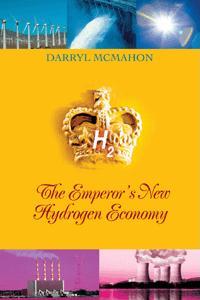
conservation), three copies of my book, The Emperor’s New Hydrogen Economy,
(which is all about environmental lifestyle choices), and some supporting materials
(business cards, copies of GreenLife magazine that have reviewed the book and the
Water Saver favourably) and some brochures.
Over the course of the evening, it became clear there is a generation gap even
in the area of environmentalism, and if the young people that wandered by my table
are representative, then our environmental future is in trouble.
The evening featured these gems from the mouths of babes.
“We can already buy electric cars, so why would anyone bother to make one?”
Apparently the automakers are airing so many ads about their electric-assist
gasoline cars (alleged hybrids) and the electric and plug-in hybrids they might
sell someday, that people believe they’re already here. Nope, we’ve actually lost
ground on this front since the 1990s when California actually had the gall to
represent the interests of its citizens instead of corporate America.
“We have lots of water in Canada, so there’s no reason to buy some gizmo to
save it.” This one still leaves me speechless.
Upon studying the title of my book for several seconds, “So, if hydrogen is
so great, when will we really start to use it?” This is the one that convinced
me there is a generation gap. Of the folks that stopped by that I judged to be
over 30 years old, it was clear from their expressions that they got it, usually
almost instantly. However, there was hardly a glimmer of recognition from those
I judged to be under 30 years of age. Has
Hans Christian
Andersen been Disneyed out of the North American childhood lexicon?
Are books and independent thought passé?
“Why do you think it is important for companies to have green credentials to
succeed?” It was clear my answer did not please the person asking. You see,
in my experience green credentials are more harm than help in the success of a
for-profit company. The average consumer has no interest in green benefits when
buying products; the focus is price (not even value) over all else. This is the
foundation of
Wal-Mart’s success, and their success has bred copy-cats in the rest
of the consumer market, which in turn has caused North America’s manufacturing
meltdown in favour of the “Made-in-China Syndrome”. If you want your business to
become large and financially successful, you need to abandon all sense of social
responsibility, including sustainable practices, to get there.
Here’s
the Fortune 500 list of the largest companies in the world. Let’s have a look
at just the top 25 for illustration of my point. Number 1 is
[dead link: http://www.democraticunderground.com/discuss/duboard.php?az=view_all&address=106x13442]
Wal-Mart, noted for
importing toxic consumer products from China and helping empty out the manufacturing
sector in North America (exporting jobs). Number 2 is Exxon-Mobil,
the largest of the eight multi-national
oil companies in the top 25 (32%), an industry noted for oil spills, land degradation,
air and water pollution and questionable human rights practices. Number 5 is Toyota
Motor, the largest of the five automakers in the top 25 (20%). Number 7 is
[dead link: http://www.welt.de/english-news/article2600863/Dutch-government-invests-Euro-10-billion-in-ING-Groep.html]
ING Group,
the largest of the nine financial/insurance companies on the list (36%). This sector
is largely credited with triggering the current global recession due to their
irresponsible actions over the past decade, and noted for its bottom-line lack of
compassion. Rounding out the group are [Link has bit-rotted: http://www.corpwatch.org/section.php?id=16]
General Electric (#12, major weapons manufacturer)
and State Grid (#24), the Chinese electrical power distributor, likely the largest primary
customer for coal-fired electrical generation on the planet.
So, I don’t see any significant green credentials anywhere in that lot (and
General Electric’s wind turbine division is a trivial part of their overall holdings,
which is much more interested in selling nuclear reactors in the electrical generation business).
I do know a few companies with green credentials. This typically also burdens
them with a social conscience, and that tends to skew their priorities away from
growth for the sake of growth and toward things that improve quality of life.
It almost goes without saying that this approach makes for small, human-scale operations.
Consumers vote with their wallets, and so far, the zombie shoppers have elected
Wal-Mart as world dictator for life, and consigned small local businesses to the trash heap.
My one-time e-mail signature line and the final words from my book:
It’s your planet. If you won’t look after it, who will?
Sorry young adults, but you are sowing the seeds of the whirlwind you will reap
in years to come. The establishment now considers you to be so societally and
politically disengaged that you are no longer even worth the effort of targeting or
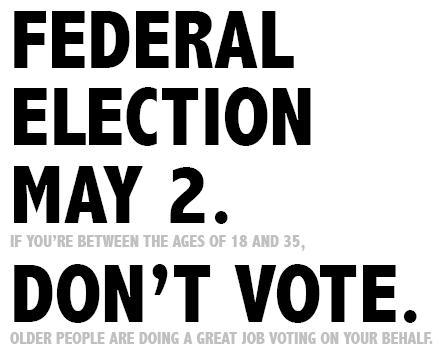
recruiting (because you don’t bother to vote). Ironically, if Canada’s youth coalesced
around a political message (say, we want a habitable, non-toxic planet for our future),
they would have the weight to really effect change in the current fragmented political
landscape federally and in most provinces. Personally, I’m shifting my focus to the
old fogies because they actually seem to care.
October 1, 2009
PHEV 09 Trade Show
I visited the trade show for the Plug-in and Hybrid Electric Vehicle conference
(PHEV09) in Montreal yesterday, hosted by
Electric Mobility Canada. [Disclosure: I am a member of EMC.]

The PHEV09 Trade Show at Complexe Desjardins (Montreal) 2009.09.30
Two things really struck me. The first was how few companies
made an appearance here given the apparent level of interest in EVs in the world
media and the Obama Administration. Perhaps this is a reflection of the total lack
of interest, or even hostility, towards EVs being demonstrated by the Canadian
federal government and most provinces, even those starting to talk 'green'.
By contrast, the delegates at the conference seemed very upbeat about what they
were hearing at the presentations.
The second thing that struck me was the David and Goliath image presented by
Steve Dallas and his stunning home-built electric car that works today vs. the
GM Volt prototype. While Steve invited people to sit in his car, GM reps were
on hand to ensure no one took that liberty with their vehicle.
Steve is from the Toronto area, in Ontario. The Ontario government recently
announced incentives to take effect in 2010 that would substantially subsidize
the price of the GM Volt (which will not be built in Ontario, if it should ever
become available for sale. Because Steve showed initiative and built his own
electric car, it will not qualify for any incentive under the provincial program.
With that sort of tilted playing field (announced tax dollars support for an unavailable
hybrid to be made outside the province; no support for an electric car built
in the province), it should come as small surprise that Steve has no interest in
producing more copies of his smart 2-seater electric car. Pity.

Steve Dallas's electric car 2009.09.30
September 29, 2009
EI Figures - What They Don't Tell Us
Yesterday (Sept. 28, 2009), government officials and the media played up the story that the
[dead link: http://www.google.com/hostednews/canadianpress/article/ALeqM5iW2b56hJY1qFXqwna_U_F58oMOBQ]
number of Canadians receiving employment insurance (EI) benefits had
declined
from June to July. The implication was that more Canadians have jobs and
happy times are here again, or just around the corner.
Not so fast with the happy button! You see, the figures
from Statistics Canada don't distinguish between people who have stopped
claiming benefits because they now have paying jobs and those who have exhausted
their benefits under the EI regime - a surprisingly short time in the 'have'
provinces like Ontario, Alberta and B.C. Given the duration of the recession to
date, folks who want to work are falling off the eligibility period end, and
likely moving to social assistance. Similarly glossed over was this pertinent bit
of information:
"Despite the decline in July, the number of regular beneficiaries was still 287,400,
or 57.4%, above the level in October 2008." That kind of dwarfs the several hundred
jobs the Economic Action Plan may have created so far.
Even the statement that the number of people making initial claims being down is
tarnished by the reality that one has to have had a job in the previous month to
qualify as such a statistic. With over 1.6 million of us now officially unemployed,
the pool of people to be made unemployed is shrinking significantly. The official
unemployed does NOT include those deemed self-employed (often a euphemism for those
not working but do not qualify for EI benefits) or those that have given up actively
looking for employment. In other words, no matter how bad the numbers look, the
reality is actually worse.
To understand what's really at play, we need to look at the figures for
the labour market unemployment rate and the labour participation rate. Those
[link has bitrotted: "http://www40.statcan.gc.ca/l01/cst01/indi02a-eng.htm] figures from
Statistics Canada put the lie to the implied good news. In fact, the unemployment
rate went UP, not down, by 0.1% from July to August, and up by 2.5% from the previous year.
The total number of people employed has fallen by 1.7% from August 2008 to August 2009.
It would be nice if a government that campaigned on being open, transparent and
accountable would just put the real numbers about their Economic Action Plan results and
the real data about unemployment out in the public domain in an unvarnished manner instead
of cherry-picking their data and presenting it without context via the media.
July 25, 2009
Ontario Announcement Regarding Incentives for EVs and PHEVs
An Open Letter to Ontario Premier Dalton McGuinty
Dear Premier McGuinty:
I would like to thank you for your government's recent apparent reversal regarding
support for clean air transportation in Ontario.
[dead site: http://www.news.ontario.ca/opo/en/2009/07/ontario-leading-the-charge.html]
The announcement on the Ides of July 2009 included statements which were as stunning
to a long-time Ontario electric vehicle advocate as they were ambitious and sweeping.
Statements like “The McGuinty government aims to have one out of every 20 vehicles driven
in Ontario to be electrically powered by 2020. “ and “Ontario will also add 500 electric
vehicles to the Ontario Public Service fleet.“
It's as if someone flipped a switch and your government finally got the message.
You know, THE message. As if someone finally put together the devastation of climate
change from burning fossil fuels in our vehicles, the burden of health effects caused
by automotive emissions, and the need to foster an economic environment that is about
sustainability instead of the extinction of the human species, and grasped that there
is an answer.
It's hard to believe that this came from the same government that had to be badgered
into allowing electric-assist bicycles in the province, and only relented in 2006 with
a pilot program. Or the same government that only grudgingly permitted Low Speed
electric Vehicles (LSVs) on our roads this year, and with such harsh restrictions that
no one will build a vehicle to meet the unique and oppressive Ontario regulations; and
that a decade after the federal government created the classification. Or the same
government that took away preferential license fees for electric cars a few years ago.
Or the same government that still prohibits electric motorcycles from using major Ontario highways.
However, I am confused by the one-year phase-in period before any of the announced
incentives come into effect. Why not let the pioneers that already drive battery
electric and plug-in electric hybrid vehicles benefit now? Why not provide a retro-active
reward payment to those with licensed vehicles as of the effective date showing a Motive
Power of E(lectric)? If the motivation really is putting clean air, electric cars that
produce less Greenhouse Gases on Ontario roads, why not reward those innovators that are
already doing so?
My fear is that this government is not so much interested in cleaner air as they are
in providing an additional bail-out to GM and Chrysler, now that you are shareholders.
The devil is in the details, and my concern is that your government will restrict the
incentives to specific makes and models, as it did with the fuel efficiency incentives of recent years.
On reflection, if your government had taken this stance just three years ago instead
of putting it off another a year into the future, perhaps we would have a domestic market
for the burgeoning surplus of electricity in the province. A surplus that has reached
such proportions that we are now shutting down perfectly functional nuclear reactors to
reduce the supply. Further, last summer, when gasoline was over $1.40 a litre, Ontarians
would have had another option for their transportation needs – electric vehicles.
Personally, I look forward to getting my Green Plates for my current, highway-capable, electric car, and I
hope this signals a pervasive change in your government's attitude toward electric
and plug-in hybrid electric vehicles. Now, if only there were HOV lanes in Ottawa.
July 21, 2009
Irrational enthusiasm in the markets
Last week, North American stock and commodity markets were showing a correction
(downward trend) that was comprehensible given underlying economic data. This week,
a rally has taken hold that defies understanding. The underlying fundamentals have
not improved markedly. Unemployment figures continue to rise. Earnings reports may
be 'beating expectations', but in general they are not particularly good. Those
companies that are showing increased earnings are doing so by slashing expenses - including
ongoing maintenance and normal internal infrastructure investments. While that may
improve the bottom line in the short term, the real concern is that the top line is
not improving. In the longer term, the current cost slashing is killing the goose
that lays the golden eggs. This cost slashing reduces employment and purchases from
suppliers. In turn, the suppliers reduce inventories, dropping their purchases and
leading them to cut jobs as well. As more people lose jobs, they reduce their
expenses, including housing, dining out, consumer products, entertainment and services.
All of this feeds the downward spiral. The downward spiral means more businesses will
see a continuing decline in their top line. If that continues, eventually they have
to close their doors.
Until we see some sign of recovery (not just a slowing in the rate the economy is
shrinking), there is no fundamental reason why the equity or commodity markets, as a
whole, should be rising in value. Companies will not be growing. Consumer discretionary
income will not be increasing. If consumers aren't buying, then companies that service
them (e.g., automakers, appliance makers, housing, airlines, banks) aren't selling, or
making profits. That means no earnings to pay out to shareholders. So, where's the basis
for the apparent enthusiasm for equities and commodities the past few days?
Ironically, the trigger for the rally seems to have been the surprisingly strong
earnings report of Goldman Sachs last week. This is one of the major U.S. financial
institutions that was so over-leveraged due to its gambling positions that it required
U.S. government support (TARP) in order to simply survive in the past year. Sadly,
their fast recovery seems to have emboldened their management with a sense of invincibility.
It appears they are intent on returning the days of high risk strategies and high
bonuses for senior executives - exactly the practices that triggered the international
financial crisis of 2008.
It appears the high rollers and speculators that burned so many investors in 2008,
while surviving off the tax dollars gouged from the very people they burned, are intent on
re-inflating the bubble. In my opinion, this strategy is destined to repeat the cycle of
2008, on a lesser scale only due to the number of folks that lost a lot of money, or
are now taking a more conservative stance.